
Scaffolding Safety
SCAFFOLDING SAFETY TIPS & HINTS
Whether you’re working on the next high-rise or on a development, staying safe while working on scaffolding is important. In this blog we’ll give you a list of handy hints and tricks to ensure you’re good to go whenever you’re working at heights.
Before we start our scaffolding crash course, it’s important to notice that the following blog is simply a rough guideline. Please consult with your employer to receive the necessary training when working at heights.
With that out of the way, let’s start our scaffolding crash course:
The DO’s of working on scaffolding
Get the correct training
Safety regulations mandate that all workers working on or near scaffolding be properly trained and educated on how the scaffolds are designed and operated. This includes all facets such as how to get on and off safely, how to prevent falls and also how to respond to emergency situations while on the scaffolding.
Balance yourself
Scaffolding must be perfectly level in order to minimise the risk of workers falling off and be injured or killed. Stay alert and watch your balance.
Carry out a health and safety check before using a scaffold
Scaffolding structures need to be constantly maintained and inspected in order to maintain their structural integrity and safety. Failure to keep the components maintained could lead to extremely dangerous conditions.
Understand load capacity
During the design stages of scaffolding, one of the main mistakes made is failing to consider all the different types of load that the material will be under during construction and setup. Do not attempt to overload the scaffolding.
Secure the platform
Scaffolding is designed to be braced by or be entirely attached to a building. If bracing isn’t properly secured, scaffold movement may dislodge an end – reducing the stability of the scaffold. Ensure you install and use an adequate brace retention or locking system.
Use guardrails
When planning to work at heights over 3m, ensure your scaffolding’s design has guardrails on at least the three sides facing away from the building. The side facing the building is still a danger. We would highly recommend to install guardrails on that side too.
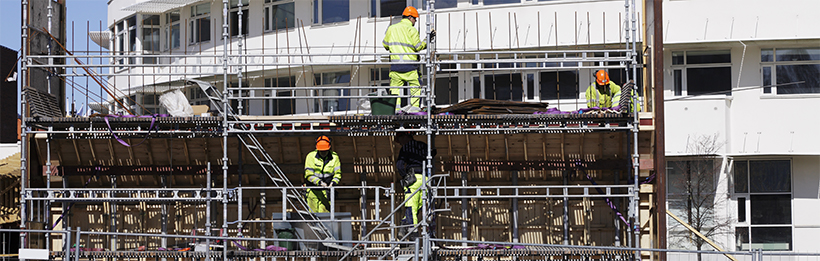
Wear the correct clothes or PPE
This can include things like head protection, fall prevention gear and non-slip footwear. It is essential to wear these measures at all times in order to maximise your safety, and the safety of all who are around you.
Be prepared
Always ensure that you are inspecting scaffolding thoroughly before using it. Check to ensure the base is secured, and that it’s level and adjusted for any lean in the building. Make sure that every single guard rail and plank is installed safely and securely, and also look out for any elevation changes, obstructions – such as wires – and weather conditions.
Always maintain a three-point grip
When you’re climbing a scaffold, always maintain a three-point grip. That means that one hand and two feet, or one foot and two hands, should stay in contact with the scaffold at all times. Keep your body as close to the frame as possible. Leaning way out could cause the whole scaffold to tip over right on top of you.
Keep things organised
Scaffolding structures are notoriously cramped, so it’s extremely important that tools are not left out and are put up neatly on the scaffolding itself. Keep all of the walkways free from obstructions and trash that might cause a fall.
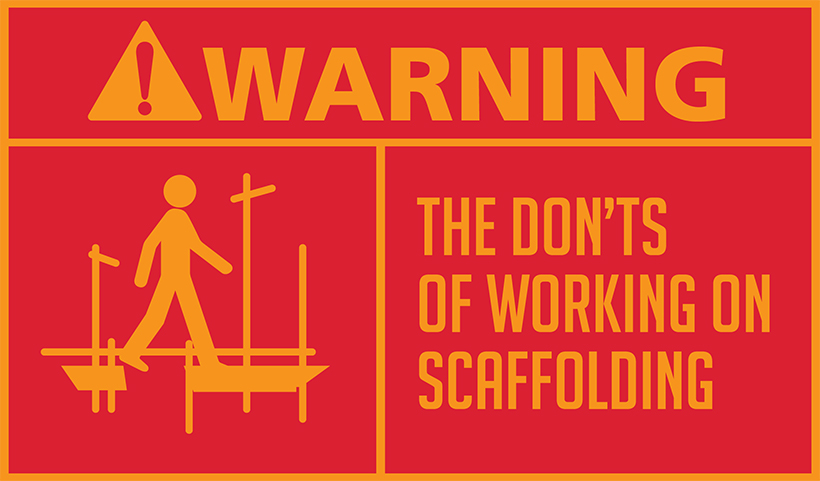
THE DON’TS OF WORKING ON SCAFFOLDING
- Do not climb or shimmy along the scaffolding steel work
- Never use a scaffold without a scaffold tag in place
- Do not climb up or down a scaffold or enter the scaffold from an unapproved entry point
- Do not remove any ties or bracing, if they require moving consult with your site manager
- Do not use makeshift platforms. Use the correct type of scaffolding boards and bearers.
- Do not throw, drop, bomb or tip materials from any height
- Don1t use unstable objects such as barrels, boxes, loose brick or concrete blocks to support scaffolds. Increase your work height or planks.
- Don1t move a mobile scaffold if anyone is on it
- Don1t work on platforms or scaffolds unless they’re fully planked
- Don’t leave anything on the scaffold after your shift
There you have it! We hope our quick crash course has given you some food for thought, but please, we recommend you go for the appropriate training to ensure that you – and your employees – stay safe at any height.
YOU MIGHT ALSO LIKE THIS ARTICLE: